
| GOLDEN VALLEY PROBUS CLUB |
Home About Us Notices Archive Contact Links |
GALLERY - SPECIAL EVENT - VISIT TO PROBUS CAMBRAI-DOUAI - PHOTOS (E16M px) |
Back to E16m |
Except as reported otherwise, photos by Peter & Jackie BG.
| Wednesday, 14th September, morning - walking tour around Cambrai |
|---|
|
| Our guide advised us that much of the city centre had been rebuilt following the devastation of World War 1. There was a mix of styles, to reflect the city's complicated history, but nevertheless the overall effect was impressively consistent. One of the things that particularly caught our eye was that some buildings appearing to be of Flemish style. This harked back to the time when Cambrai & Flanders were both controlled by the Spanish Empire, a point that led most of us to realise how little we knew of European History. |
| Thursday, 15th September, morning - visit to the World War 1 museum at Péronne |
|---|
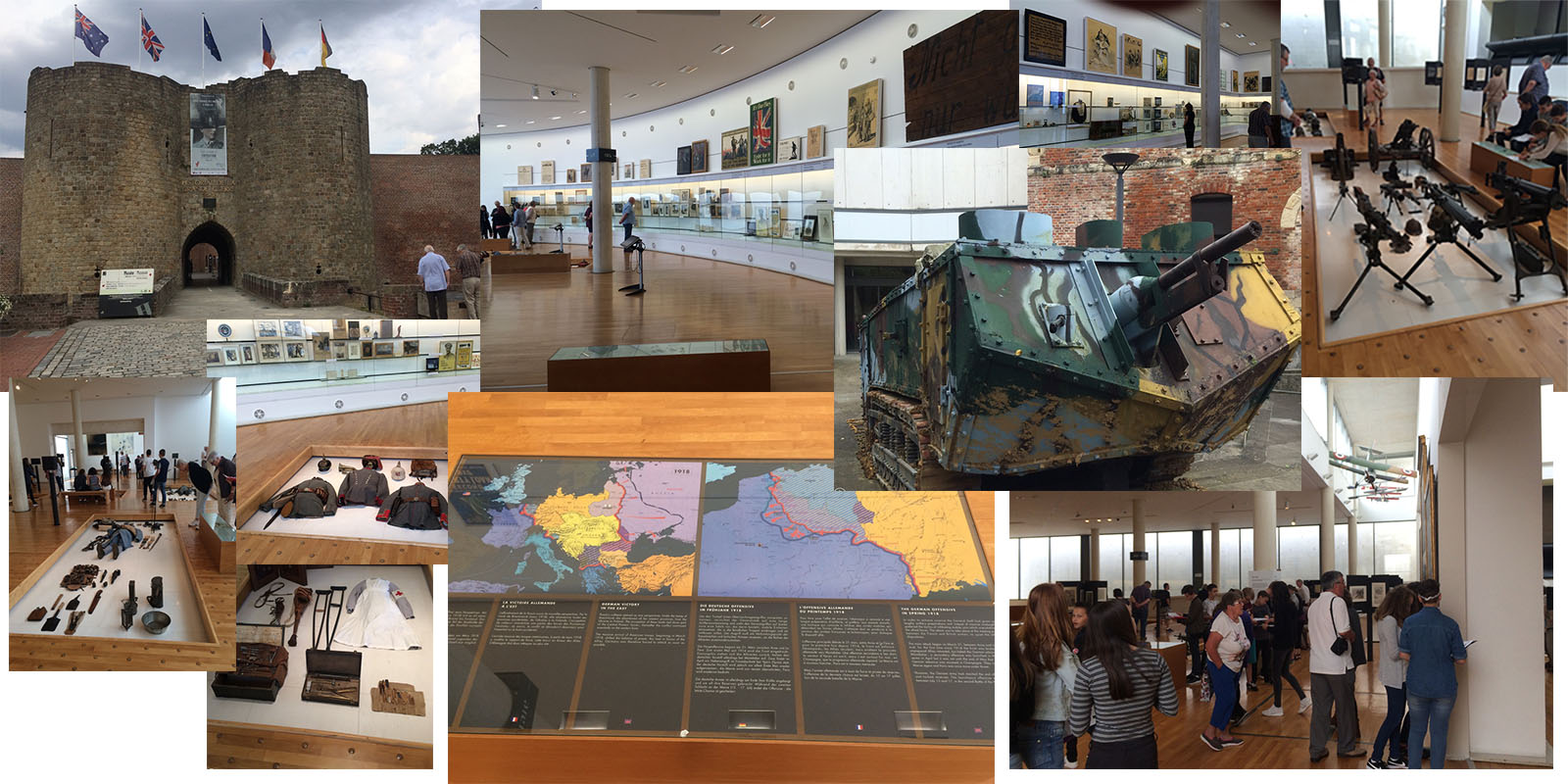 |
This is a very impressive museum. The displays were interesting, showing that a lot of thought had been put into them. Old films were supported by modern presentations. Some people did not like the fact that several uniforms were laid out flat on the ground. Other people found that to be thought-provoking. Outside the museum stood a Saint-Chamond tank, one of 400 made by the French in 1917-18. Thanks to Eric for providing the following photos. |
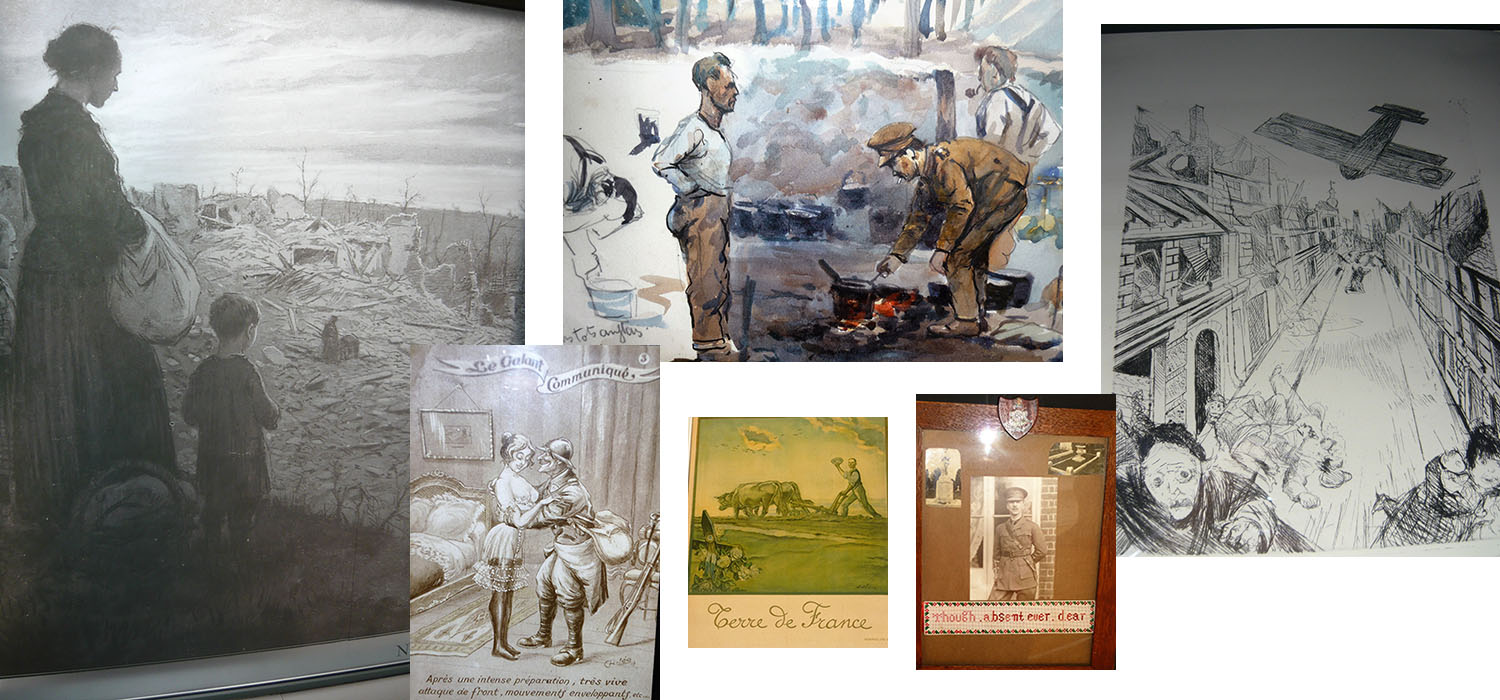 |
| Thursday, 15th September, afternoon - visit to Vaucelles Abbey |
|---|
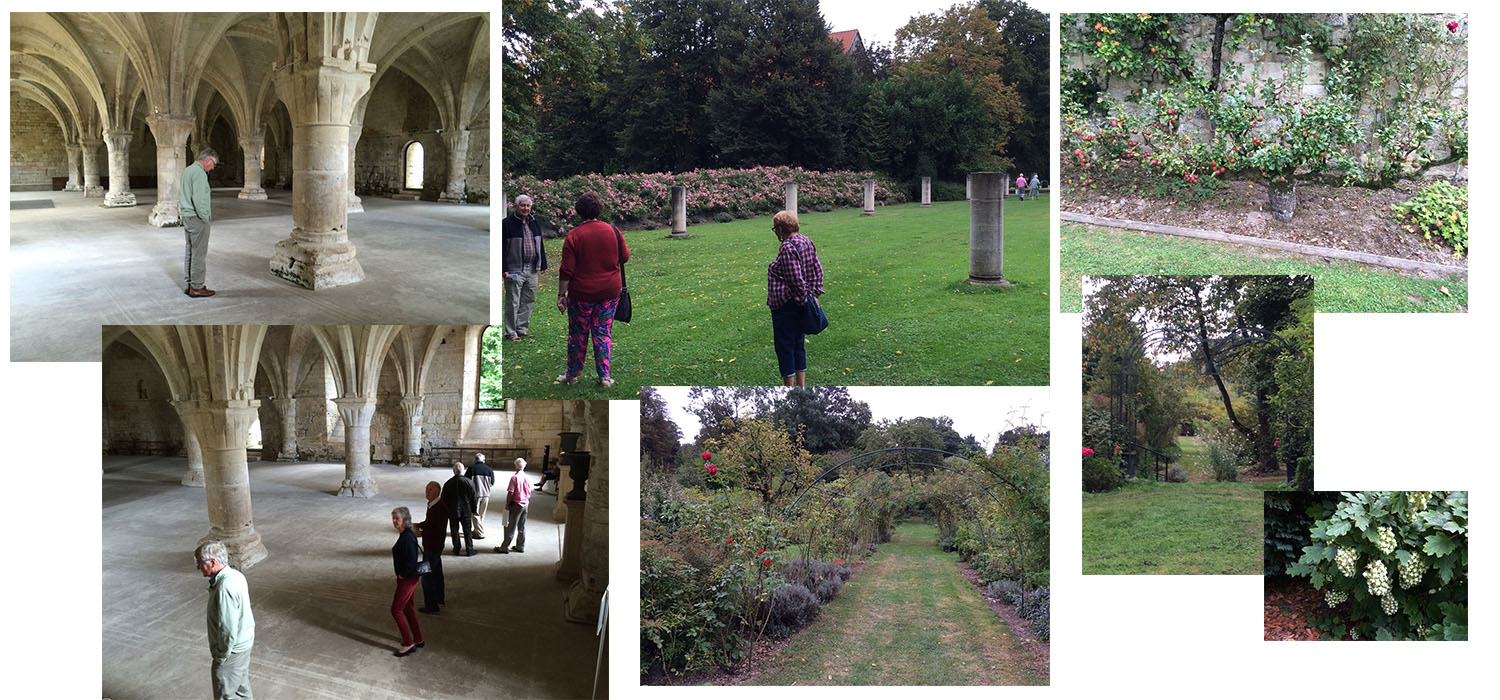 |
| The part we had access to had 5 rooms/areas left from the ancient abbey, one leading to the next. They started with The Monks' Room (which once held "the most prestigious library of all Europe", sadly lost during the World Wars of the 20th century), then came The Parlour or Auditorium ("the only place where, for the necessities of communal life, utilitarian conversations between the monks and the prior could be engaged. Everywhere else, absolute silence was obligatory.") then The Chapter House (pictured, reputed to be "the biggest Cistercian Chapter House in Europe"), then The Sacred Passage (where monks changed from their duty clothes into their white monastic cowls), then a small Chapel (which was somewhat bare). In the garden, as shown by the photo above, pillars were positioned to show where the church's nave would have been. The garden was quite well kept but showed signs that the plentiful fruit & vegetables were not being harvested as they would have been in the past. Words between quotation marks were taken from a short guide notelet provided in the entrance lobby/shop. |